
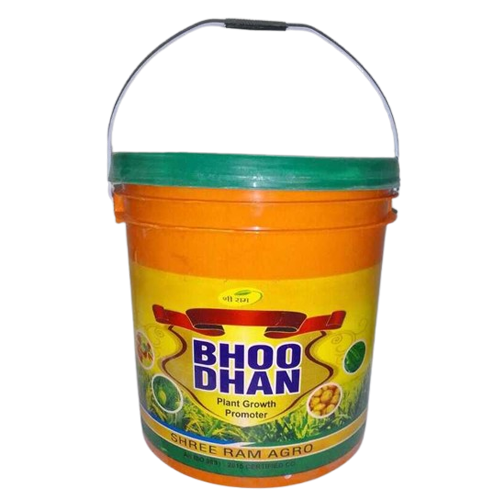
BHOO DHAN (Plant Growth Promoter)
150.0 INR/Kilograms
Product Details:
- Shelf Life 1 Years
- Formulations Type Liquid
- Application Agriculture
- Physical State Liquid
- Release Type Quick
- Product Type Liquid
- Click to View more
X
BHOO DHAN (Plant Growth Promoter) Price And Quantity
- 150.0 INR/Kilograms
- 500 Kilograms
BHOO DHAN (Plant Growth Promoter) Product Specifications
- Quick
- Agriculture
- Liquid
- 1 Years
- Liquid
- Liquid
BHOO DHAN (Plant Growth Promoter) Trade Information
- 1000 Kilograms Per Month
- 7 Days
Product Description
Plant growth regulators (PGRs) are usedito modify plant growth, influencing various aspects like stem elongation, flowering, and fruit development.iThey can improve crop yields, enhance fruit quality, and manage plant growth under stress.iPGRs are applied to plants to achieve specific outcomes, such as increasing branching, suppressing shoot growth, or altering fruit maturity.i
Specific uses of PGRs:
iiiiiiii Regulating Shoot Growth:
PGRs can control the rate and direction of shoot growth, making plants more compact and manageable.iThis can be particularly useful in horticulture for shaping bonsai or maintaining uniform plant height.i
iiiiiiii Enhancing Flowering and Fruiting:
PGRs can promote or delay flowering, improve fruit set, and influence fruit size and shape.iThey can also prevent premature fruit drop.i
iiiiiiii Improving Stress Tolerance:
PGRs can help plants withstand environmental stresses like drought, heat, and salinity.i
iiiiiiii Increasing Yield and Quality:
By optimizing plant growth and development, PGRs can contribute to increased crop yields and improved fruit quality.i
iiiiiiii Controlling Plant Size and Shape:
PGRs can be used to manage plant height and shape, making them suitable for various applications, including landscaping and container gardening.i
Versatile Application Methods
BHOO DHAN accommodates different farming practices by offering powder, liquid, and granular forms. Its quick-release formulation ensures fast results, whether applied directly to soil, mixed with water for foliar spraying, or incorporated as granules. This versatility provides convenience for users seeking optimal plant growth in various agricultural settings.
High Purity for Maximum Impact
With a purity ranging between 98% and 100%, BHOO DHAN delivers reliable and concentrated active compounds. This high level of purity ensures dependable results across diverse crops. Accurate dosing as recommended guarantees optimal plant response and minimizes resource wastage, contributing to sustainable farming practices.
Reliable Supply Across India
BHOO DHAN is manufactured, supplied, and traded across India, ensuring consistent availability for farmers. The product is supported by a transparent supply chain and a year-long shelf life, making it a dependable solution for ongoing agricultural demands.
FAQ's of BHOO DHAN (Plant Growth Promoter):
Q: How should BHOO DHAN be used for best results?
A: BHOO DHAN should be applied according to the specific dosage recommendations provided by the manufacturer or agricultural extension experts. Application methods vary based on formulation: liquid forms are suitable for spraying or irrigation, powders can be broadcasted or dissolved, and granules are best for soil incorporation.Q: What are the main benefits of using BHOO DHAN for crops?
A: Using BHOO DHAN enhances plant vigor, boosts root and shoot development, and leads to higher crop yields. Its quick-release formula ensures rapid nutrient uptake, supporting healthier and more resilient plants during crucial growth stages.Q: When is the ideal time to apply BHOO DHAN during the crop cycle?
A: Apply BHOO DHAN at the early vegetative stage or during active growth periods for best results. Repeat applications may be recommended based on crop needs and growth cycle, following advised intervals.Q: Where can BHOO DHAN be sourced in India?
A: BHOO DHAN is widely available through authorized manufacturers, suppliers, and traders across India. Farmers should obtain it from reputable agricultural stores to ensure product authenticity and support.Q: What is the recommended process for mixing and applying BHOO DHAN?
A: For liquid formulations, dilute BHOO DHAN as directed and apply via foliar spray or drip irrigation. For powder and granules, distribute evenly in soil or as advised. Always adhere to the suggested concentration and application frequency.Q: Does BHOO DHAN work for all crops and soil types?
A: BHOO DHAN is suitable for a wide range of crops and adaptable across various soil conditions. However, specific dosage and application methods may need adjustment according to local crop requirements and soil analysis.Tell us about your requirement

Price:
Quantity
Select Unit
- 50
- 100
- 200
- 250
- 500
- 1000+
Additional detail
Mobile number
Email

Other Products in 'Growth Promoter' category

Contact Us
- JAI SHREE RAM AGRO PRIVATE LIMITED
GST : 06AAFCJ4599P1ZP - Head Office : 1042, Pritam Nagar, Near Sec 16, Namaste Chowk, Karnal - 132001, Haryana, India
- Unit 2 : Vpo Nagla Megha, Meerut Road, Karnal - 132001, Haryana, India
Unit 3 : Vill Andhera, Meerut Road, Karnal - 132001, Haryana, India - Phone : 07971550486
 Send Inquiry
 |
JAI SHREE RAM AGRO PRIVATE LIMITED
All Rights Reserved.(Terms of Use) Developed and Managed by Infocom Network Private Limited. |
